Generator service
Marine generator service on Shasta Lake
On a houseboat, the generator is a second engine, and when it quits the whole boat changes. The air conditioning stops, the fridge goes warm, the lights and pumps and outlets lose their power, and forty minutes up an arm in 108 degree heat, a boat that was a vacation becomes a place nobody wants to spend the night. That is why marine generator work is the signature job on this lake, and why it is almost always a mobile one: the boat carrying the genset is the one boat that can never be hauled to a shop.
The genset is a whole separate engine
People think of the generator as an appliance, but it is not. A marine genset is a complete small engine with its own fuel supply, its own raw-water cooling circuit, its own exhaust, its own oil system, and its own electrical and control side that turns mechanical power into the AC current the boat runs on. It just happens to spin an alternator head instead of a propeller. That is the key thing to understand about the work and the price: servicing the genset is a second engine job on top of whatever the propulsion needs, which is exactly why it gets quoted on its own rather than folded into a boat service.
Because it is a separate engine, it fails in the same families of ways any engine does, and a mechanic who works Shasta houseboats has seen all of them. The engine repair page covers the propulsion side; this page is about the genset that keeps the rest of the boat alive.
Genset down and the AC out on a hot weekend? Describe the boat and what it is doing on the phone.
What tends to fail
Marine generators quit for a handful of common reasons, and most of them are the sort of thing a mechanic can chase down and sort out at your dock.
Fuel
Same story as any marine engine, and often worse, because a generator sips fuel slowly and the tank sits a long time. Stale ethanol gas, water in the fuel, a clogged filter, or a failing lift pump leaves the genset cranking without catching or starting and then dying under load. On a boat that gets used a few weekends a season, fuel is the first thing to suspect.
Cooling and the impeller
A genset is raw-water cooled just like the main engine, which means it has its own raw-water pump and its own rubber impeller pulling lake water through to carry off heat. That impeller gets brittle and sheds vanes with age and heat exactly like the propulsion one does, and in Shasta summers it works hard. A generator that overheats and shuts down, or that alarms and quits after a few minutes, is very often a spent impeller or a blocked raw-water intake. It is a routine part on a routine schedule, ignored until the hot weekend it strands you.
Electrical and controls
The genset also has the side a propulsion engine does not: the generator head, the voltage regulator, and the control board that starts it, monitors it, and shuts it down on a fault. A unit that spins but makes no power, throws breakers, or refuses to start despite a healthy engine is usually a control, wiring, or regulator problem rather than anything mechanical. Sorting that takes testing and knowing the unit, not swapping parts and hoping.
Exhaust and low-oil shutdown
Marine gensets protect themselves aggressively, which is a good thing that owners sometimes misread as a breakdown. A low-oil sensor will shut the unit down cold rather than let it run itself dry, and a boat that sits at an angle or is low on oil can trip that when nothing is truly broken. Wet exhaust components, the mixing elbow and hose that carry cooling water and exhaust out together, also corrode and clog over time and can back pressure or overheat the unit. A mechanic reads why it shut down instead of just resetting it and hoping it holds.
Why it is quoted separately, and what it costs
Because the genset is its own engine, the work on it is priced on its own. There is no honest flat number to put on this page, because a fuel filter and an impeller are a short visit while a control-board fault or a corroded exhaust system is a much bigger one, and the units on Shasta houseboats range widely in make, age, and access. What is consistent is the labor basis, mobile marine rates of $110 to $175 per hour plus the trip fee, the same as any other job on the lake. The boat repair cost page lays out those two numbers and why generator work sits in the quoted-separately row rather than getting a range it cannot honestly hold.
Plenty of visits cover both the genset and the propulsion in one trip, especially on a houseboat where you have the mechanic out anyway. They are still two jobs on the bill, because they are two engines, but you save a second trip fee by doing them together.
Why this is a pure mobile job
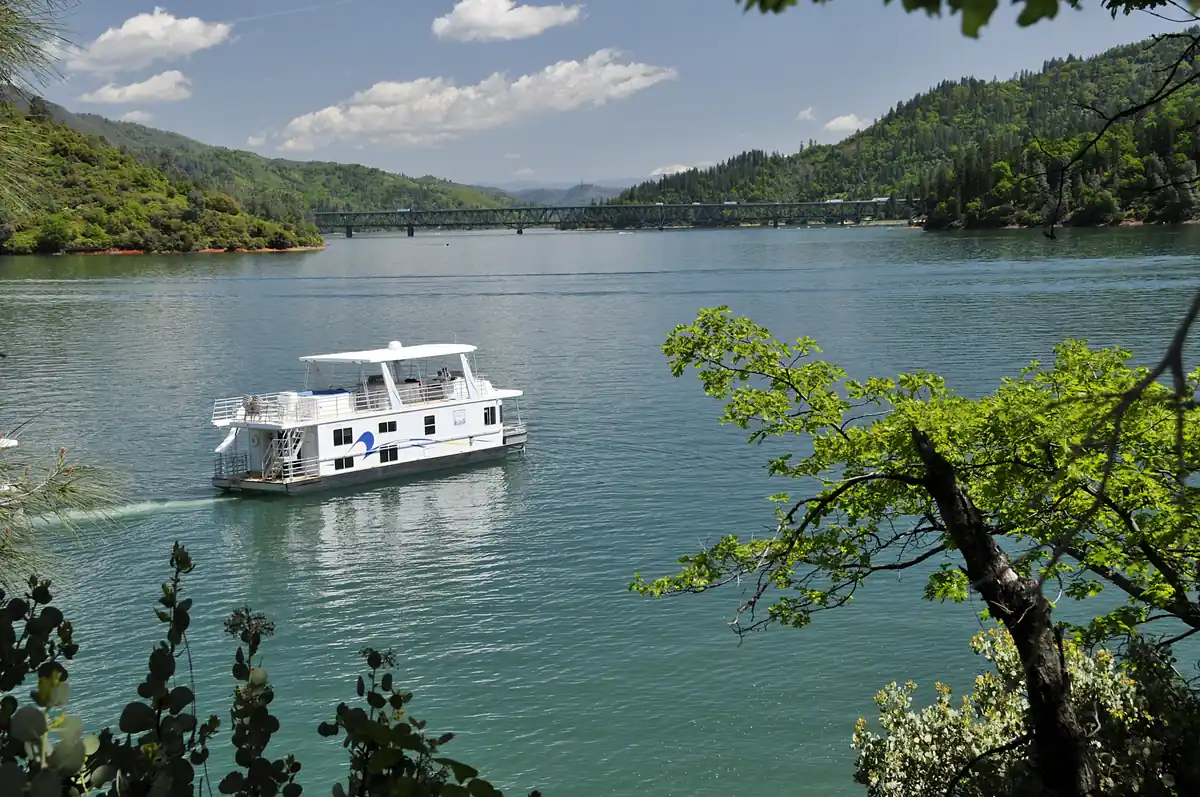
Here is the part that makes generator service different from almost everything else. A ski boat with a bad genset, if it had one, could in theory be trailered somewhere. A houseboat cannot. It does not come out of the water, it does not go on a trailer, and it does not visit a shop, ever. So when the generator on a houseboat fails, there is no haul-it-in alternative to weigh against a mobile call. The mechanic coming to the boat is not the convenient option, it is the only option, and that is truer of the genset than of any other system aboard, because the genset lives almost exclusively on the big boats that cannot move under tow to a repair yard on any reasonable timeline. That reality is the whole reason this lake supports mobile marine work, and it is covered more broadly on the Bridge Bay and Lakehead marina pages where the houseboat fleets live.
Houseboat generator quit up the arm? Get connected with a mechanic who works the marinas.
Exercise it and service it
The best thing an owner can do for a marine generator is run it. A genset that sits for months develops the same troubles as any idle engine, stale fuel, a stuck impeller, a flat battery, corroded contacts, only you do not find out until you flip it on for the first hot weekend and it will not go. Running the unit under a real load for a while every few weeks keeps the fuel moving, the seals wet, and the electrical side exercised, and it surfaces small problems in the driveway instead of mid-lake. Pair that with an annual service that covers oil, filters, the impeller, and a look at the exhaust and controls, and the genset stays a background hum instead of a ruined trip. The winterizing page covers laying the generator up correctly for the off-season, which is the other half of keeping it healthy.
Generator questions
The generator runs but there is no power on the boat. What does that mean?
That usually points at the electrical side rather than the engine, the generator head, the voltage regulator, or the control and breaker wiring, since the engine itself is clearly turning. It can also be a tripped breaker or a transfer switch issue. Because a running engine with no output narrows the problem to the electrical end, describe it that way when you call so the mechanic brings the right test gear and parts.
Can you actually get parts for an older marine genset?
Often yes, though some older or less common units need a part sourced, which can stretch the work across a second visit. That is supply, not the mechanic dragging it out. Tell the contractor the make, model, and roughly the age of the generator on the first call so they can check parts before driving out, and you know up front whether you are waiting on something.
My genset shut itself off and will not restart. Is it wrecked?
Usually not. Marine generators shut down on purpose to protect themselves, most often on low oil or high temperature, so a cold shutdown is frequently the unit doing its job rather than a failure. The mechanic reads why it tripped, low oil, a cooling problem, an impeller, before resetting it, because clearing the fault without fixing the cause just lets it happen again, possibly with real damage the next time.
How often should a houseboat generator be serviced?
At least once a year, and more if you run it hard all summer, which on Shasta most people do because the AC depends on it. Annual service covers oil and filters, the raw-water impeller, and a check of the exhaust, cooling, and electrical side. Between services, run the unit under load every few weeks so problems show up at the dock instead of on a hot weekend far from the ramp.
Do you service the boat's air conditioning too, or just the generator?
The mechanic handles the generator and the marine electrical and cooling systems that the AC depends on, which is where most no-cool problems on a genset-powered boat actually live. Interior cabinetry, appliances, and finish work beyond the mechanical and electrical systems are a different trade. Describe what is not working, no power at all versus the AC unit itself running but not cooling, so the right person comes out.
Get connected with a local mobile marine mechanic.