Winterizing and spring service
Boat winterization and spring service on Shasta Lake
Shasta is a warm-country lake most of the year, so it is tempting to think winterizing is a snow-country problem that does not apply up here. It does. Redding and the lake get hard cold snaps that drop below freezing, and it only takes one cold night with lake water sitting in an engine block to crack a casting that costs a fortune to replace. Winterizing is cheap insurance, spring commissioning gets the boat ready for the first hot weekend, and both are jobs a mobile mechanic does right where the boat lives.
Yes, Shasta gets cold enough
The mountain-lake reality is milder than the snowbelt but not as forgiving as the summer heat suggests. Winter nights in the Redding basin and up around the lake arms dip below freezing, and the upper elevations get colder still. Water expands when it freezes, and an engine block, an exhaust manifold, or a raw-water circuit full of lake water can crack when that water turns to ice, even on a single unexpectedly cold night. A cracked block is one of the most expensive words in boating, and it is entirely preventable. That is the whole case for winterizing here: not because Shasta is Minnesota, but because it only takes one cold snap, and you cannot pick which night it comes.
The bigger enemy on this lake, honestly, is not the freeze at all. It is a boat that sits. A boat parked from fall to spring with untreated ethanol fuel, a discharged battery, and water left in the wrong places does not need a hard freeze to give you a rough start next season, it just needs time. Winterizing addresses both problems at once, the rare freeze and the far more common damage of sitting idle.
Putting the boat away for the season? Lay it up right so spring is a boating weekend, not a repair bill.
What winterizing actually covers
Laying a boat up properly is a checklist, and a mechanic runs the whole thing so nothing gets missed.
Fog the engine
Fogging oil coats the internal engine surfaces so they do not corrode while the motor sits idle for months. On a lake where boats sit through a long off-season, this is what keeps cylinders and valves from surface-rusting between uses.
Drain and antifreeze the block
The heart of freeze protection is getting lake water out of the cooling system and, where called for, running non-toxic marine antifreeze through the block, the manifolds, and the raw-water circuit. This is the single step that stands between a cold snap and a cracked casting, and it is why winterizing is worth doing even in a mild winter.
Stabilize the fuel
This is the step that matters most on Shasta, because sitting fuel is the biggest cause of a rough spring. Stabilized fuel, a topped-off tank to limit condensation, and treated lines keep ethanol gas from separating and turning to varnish over the winter. Skip it and you are looking at the gummed carburetor and clogged injectors covered on the won't-start page come spring.
Battery and systems
A battery left to sit discharges and, in any cold, can be damaged, so it gets charged, disconnected, or pulled and stored. The mechanic also drains water systems, freshwater and washdown lines, that could freeze, and checks that nothing is left holding water where it should not.
On a houseboat, the genset and water systems too
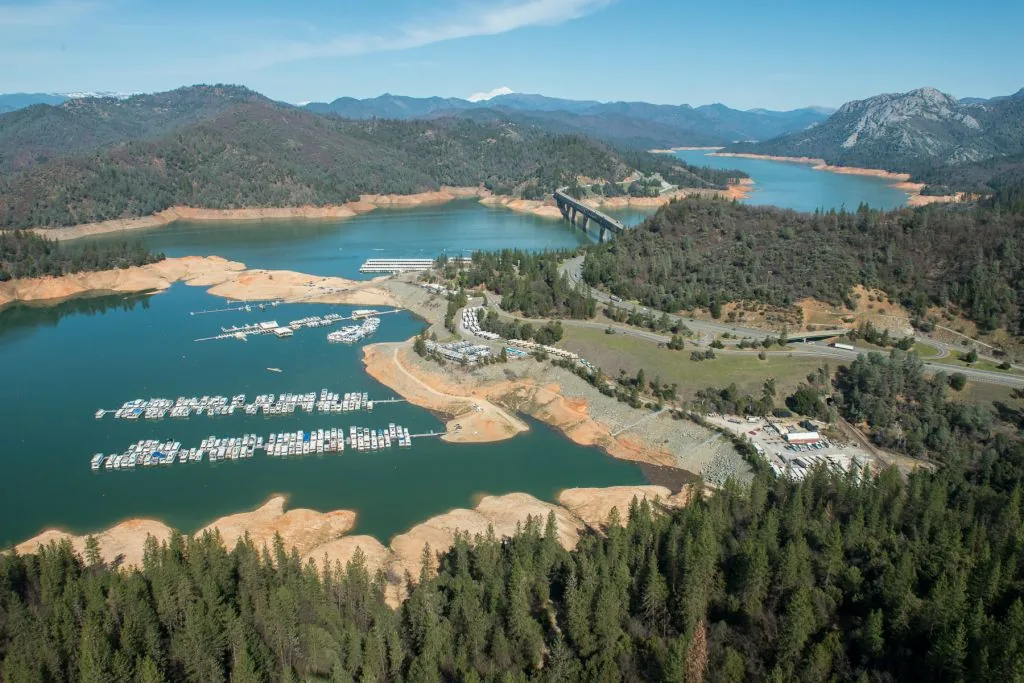
A houseboat is not one engine, it is two, plus a lot of plumbing. The generator has its own cooling circuit, fuel, and oil that need laying up exactly like the propulsion engine, and the boat's water systems, the freshwater tank, the lines, and the pumps, all need draining and protecting so nothing splits over the winter. Winterizing a houseboat is a bigger job than a runabout for that reason, and it all happens on the water, because the boat is not going anywhere. The generator service page covers the genset side in more depth.
Spring commissioning, the other half
Winterizing and spring commissioning are two ends of the same calendar. In the spring the mechanic reverses the lay-up and gets the boat ready to run: reconnect and test the battery, flush any antifreeze, check and replace the raw-water impeller if it is due, change fluids and filters, inspect belts and hoses, look over the fuel system, and run the engine up to confirm it cools and runs right before you trust it on the water. On a lake with a short, intense season, you want that first hot weekend to be a boating one, not the afternoon you discover the impeller crumbled or the fuel went off over the winter.
Spring is also the natural time to fold in the annual engine service and the outdrive service, since the mechanic is already going through the boat. Doing it all in one spring visit is how owners on this lake stay ahead of the summer breakdowns instead of chasing them in July heat.
Prevention is the cheap path
The theme of both jobs is the same one that runs through everything on this lake: the planned service is always cheaper than the breakdown. Winterizing runs the trip fee plus an hour or two plus materials, a modest, predictable number laid out on the boat repair cost page. A cracked block, a fuel system full of varnish, or a dead battery discovered on the launch ramp costs far more in money and in a ruined day. On a hot lake with a short prime season and a real off-season of sitting, prevention is not the cautious choice, it is the frugal one.
At your slip or in the driveway
Both winterizing and spring service come to the boat. A trailer boat gets done in a Redding driveway, a slipped boat or a houseboat at the dock, wherever it lives. That matters most for the houseboats, which cannot be hauled anywhere for a lay-up and rely entirely on a mobile mechanic to protect the engine, the genset, and the plumbing before the cold comes. Tell the mechanic where the boat sits, up at Lakehead, central near Bridge Bay, or trailered in Redding, and whether you want a fall lay-up, a spring commissioning, or both, so the visit is planned right.
Ready to lay it up, or wake it up for spring? Describe the boat and get a straight answer.
Winterizing questions
Does a boat really need winterizing in a place as warm as Redding?
Yes, because it only takes one freezing night with lake water in the block to crack it, and you cannot predict which night that is. Shasta winters are milder than snow country but they do drop below freezing, and the cost of a cracked block dwarfs the cost of a lay-up. On top of the freeze risk, winterizing protects a boat that is going to sit for months, which is the more common source of spring trouble here.
If I keep the boat in the water all winter, do I still winterize?
You still protect it, though the plan differs. A boat left in the slip through winter needs the engine and systems laid up against the cold nights and the months of sitting, and on a houseboat the genset and water systems too. In-water storage does not remove the freeze risk from the raw-water side of the engine, so the block protection and the fuel stabilizing still matter. Tell the mechanic the boat is staying in the water so the lay-up fits.
What is the single most important winterizing step on this lake?
Two things tie for first. Getting the water out of the block and protecting the cooling system prevents the rare but catastrophic cracked casting, and stabilizing the fuel prevents the common rough start from ethanol gas that sat all winter. The freeze step protects against the worst case, the fuel step against the most likely one. A proper lay-up does both, which is why it is a checklist rather than a single task.
When should I book spring commissioning?
Before the first warm weekend you actually want to use the boat, not on it. Spring service includes checking the impeller, fluids, filters, and fuel, and running the engine up to confirm it cools and runs right, and you want any surprises found in the driveway rather than at the ramp. On a short season, booking a few weeks ahead of the first outing keeps you off the launch-ramp repair list.
Can you winterize a houseboat that cannot come out of the water?
Yes, and that is exactly the boat that needs a mobile mechanic most. A houseboat is laid up right where it floats, propulsion engines, generator, and the water systems all protected on site, because it has no trailer-it-in option. It is a bigger job than a runabout because there is more to protect, so it is worth scheduling ahead of the first cold snap rather than after it.
Get connected with a local mobile marine mechanic.