Service area
Mobile boat repair at Bridge Bay, CA
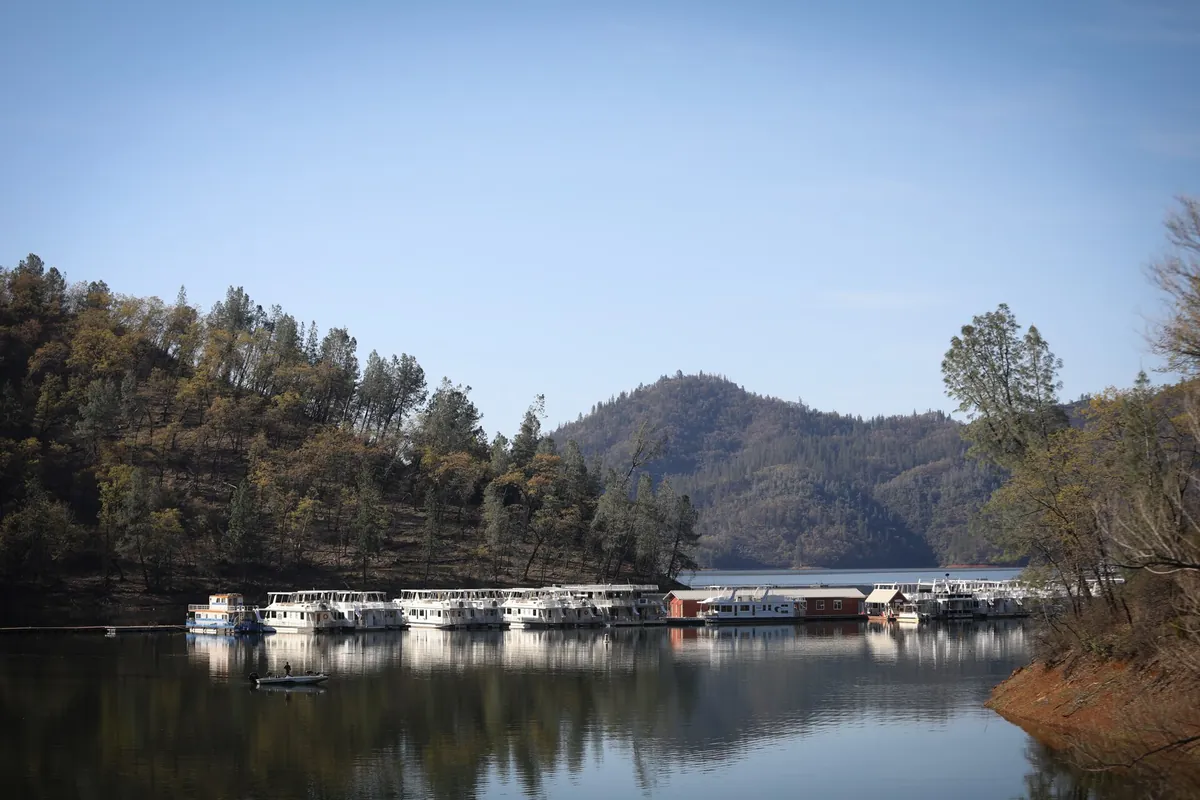
Bridge Bay sits in the middle of Shasta Lake, near the bridge and within reach of the main body, which makes it the crossroads of the lake. From here the arms open out in several directions, and the fleet is as mixed as it gets: houseboats moored for the season next to ski boats and runabouts coming and going all day. Call to get connected with a local marine mechanic.
The crossroads of the lake
A central marina like Bridge Bay is a good place to be when something breaks, because it is reachable from most directions without the long haul up a far arm. That shows up on the trip fee, which covers a base area with a per-mile charge past roughly 20 miles. A boat here usually sits closer to that base than one up the McCloud or Pit arm, so the mileage is generally more modest, even though the water around it can be busy. The full breakdown is on the boat repair cost page.
Being central also means the mechanic can often work a Bridge Bay call efficiently around other stops on the same side of the lake. That does not make the trip free, and a stocked truck to a busy marina and back is still real time, but the location works in your favor rather than against it.
A mixed fleet means mixed work
What makes a central marina interesting is the range of boats tied up in one place. On any given weekend the mechanic might see a houseboat that needs its generator sorted, a ski boat that overheated on the main body, and a runabout that will not start at the dock. Each is a different job.
The houseboats are the boats that cannot leave. A houseboat does not come out of the water or go on a trailer, so on-the-water service is the only way it gets fixed, and its generator, running the AC and the fridge in the heat, is as important as its propulsion. The generator page covers the genset side. The ski and wake boats are the ones getting hammered on the main body all summer, where overheating and outdrive wear are the usual complaints. The outdrive page covers the bellows, gimbal bearings, gear oil, and anodes that a sterndrive needs before water gets where it should not. And the runabouts are the classic dockside no-start: batteries, connections, and fuel, usually a same-visit fix per the won't-start page.
Boat down at a central marina? Describe it on the phone and get a straight answer.
Peak summer, and everyone busy at once
The central lake is where the crowds concentrate in season. From the first hot weekend the ramps fill, the docks fill, and the main body fills with boats, and that is also when every mechanic on the lake gets busy at the same moment. A breakdown on a packed July weekend is the worst time to be looking for help, because the demand that stranded you is the same demand backing up every schedule on the water.
The way around it is to get ahead of it. A boat that had its spring service done before the season, cooling system checked and impeller fresh, is a boat that is not fighting for an emergency slot in the heat. In this climate that head start is worth real money, because the alternative is a ruined weekend plus emergency-timing labor.
Central, but still on the water
Being in the middle of the lake helps with the drive, but it does not change the fundamentals of the work. A boat slipped or moored at a central marina still gets serviced where it floats, at the dock, because that is where it is, and a houseboat here is as stuck in the water as one up the far arm. Lake level matters at the center too: Shasta is a major reservoir and drops hard in a dry year, so which docks sit where and how the boat is reached shifts with the water. Saying whether the boat is slipped, on a buoy, or moored out, and which marina, lets the trip get planned around the water that is actually there rather than a guess.
Heat on the main body
Bridge Bay shares the valley's summer, past 100 and into the 110s, and boats worked hard on the open main body feel it. The most common on-the-water failure here is overheating, and the usual culprit is the raw-water pump impeller, a rubber part that gets brittle and sheds its vanes whether the boat runs hard or barely at all. Shut the motor down at the first sign of a high temperature rather than nursing it back across the lake, and call. Changing the impeller every season or two is cheap insurance against a mid-lake cook. See the engine page.
Nearby
The mechanics we refer work every arm from here. Up the far upper Sacramento arm, Lakehead is remote houseboat country and a longer trip, while over on the eastern side Jones Valley sits on a quieter arm. Tell the mechanic which marina or cove the boat is in when you call, and whether it is slipped, on a buoy, or moored out.
Get connected with a local mobile marine mechanic.